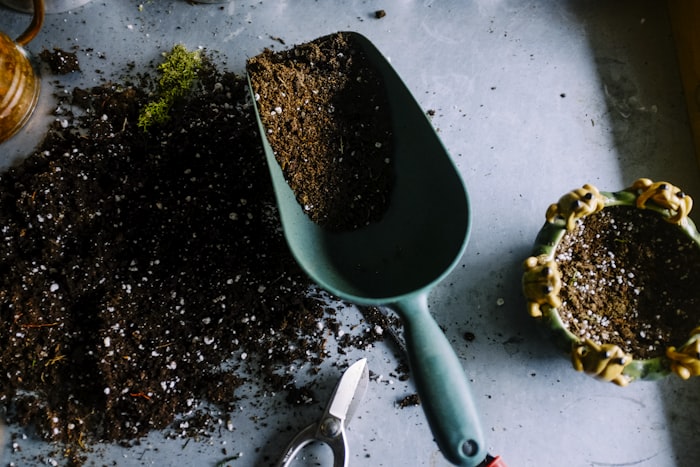
Every tool, machine, and piece of equipment you need for high-yield, efficient green pea cultivation — from soil prep to harvest.
Green peas (Pisum sativum) are a highly profitable cool-season legume crop. Using the correct tools and machinery at every stage — from land preparation to post-harvest — directly determines your yield, quality, and profit margin.
Efficient tools reduce labour costs by 40–60%, minimise crop damage during harvest, ensure uniform seed placement for consistent germination, and allow timely operations that are critical for this weather-sensitive crop. This guide covers every essential tool category for green pea cultivation.
Essential manual tools used for day-to-day field operations, planting, maintenance, and small-scale harvesting in green pea farms.
Used for breaking clods, levelling soil, making furrows, and weeding between rows. A wide flat hoe is ideal for bed preparation; a narrow collinear hoe for precision inter-row weeding.
A sturdy digging fork aerates compacted soil and improves drainage without inverting the soil profile. Critical before transplanting or direct seeding to loosen top 20–25 cm for root penetration.
Creates uniform planting holes at precise depth (3–5 cm) and spacing for pea seeds. Ensures consistent germination rate. Available as single dibber or multi-row dibber boards for large-scale planting.
Sharp bypass pruners for clean harvesting of green pea pods without damaging the vine. Also used for cutting support strings and trimming diseased shoots. Keep blades oiled and sharp for clean cuts.
For small plots — a 10L watering can with fine rose head provides gentle, uniform moisture at germination stage. Backpack sprayer (15–16L) for pesticide and foliar fertilizer applications across rows.
Ensures straight, evenly spaced rows for uniform crop density and easier mechanised operations. A simple string line with stakes or a rolling row marker wheel maintains 20–25 cm inter-plant spacing for optimal yield.
Green peas are climbing plants that need vertical support. Install bamboo stakes with jute strings, wire mesh panels, or plastic trellis netting (15×15 cm mesh) at 60 cm height for climbing varieties. Prevents lodging and improves air circulation.
Digital 3-in-1 soil tester measures pH (ideal 6.0–7.5 for peas), moisture level, and sunlight intensity. Essential before planting and during crop growth to ensure optimal soil conditions for maximum yield.
Heavy equipment that dramatically reduces labour costs and time for large-scale green pea farms of 2+ hectares.
The backbone of any mechanised pea farm. A 35–55 HP two-wheel-drive tractor powers all primary tillage, secondary tillage, seeding, and spraying operations. For smaller plots, a power tiller (8–12 HP) is a cost-effective alternative.
Tractor-mounted rotavator prepares a fine, crumbly seedbed in a single pass by cutting and mixing the top 15–20 cm of soil. Replaces 3–4 manual ploughing operations, saving time and fuel. Ideal for incorporating crop residues and compost uniformly.
A multi-row seed drill places seeds at uniform depth (3–5 cm) and spacing (8–10 cm in-row, 20–25 cm between rows) in a single pass. Reduces seed wastage by 25–30% compared to broadcast seeding and ensures even germination across the entire field.
Drip irrigation delivers water directly to the root zone, reducing water usage by 50% and minimising foliar diseases that thrive in wet conditions. Mini-sprinklers are ideal for germination stage. Combine with a fertigation unit for precise nutrient delivery.
Tractor-mounted boom sprayer with 10–12 metre boom width covers large areas quickly with pesticides, fungicides, and foliar fertilizers. Engine-powered knapsack sprayer (Honda/Kisankraft) for smaller farms. Ensures uniform coverage critical for pea disease management.
A self-propelled or tractor-mounted pea viner harvests, shells, and separates green peas from the vines in one operation. Replaces 80–100 manual labourers per day. Essential for commercial-scale farms above 10 hectares for timely harvest and minimal post-harvest losses.
Approximate price ranges for India market. Costs vary by brand, quality, and region. Consider hiring/renting machinery before purchasing for small farms.
| Tool / Equipment | Category | Approx. Cost | Best For |
|---|---|---|---|
| Garden Hoe Set | Hand Tool | ₹200–500 | All farms |
| Garden Fork | Hand Tool | ₹300–800 | All farms |
| Dibber / Seed Dibble | Planting | ₹100–400 | Small–Medium |
| Trellis Netting (100 m) | Support | ₹800–2,000 | All farms |
| Backpack Sprayer (16L) | Crop Protection | ₹1,500–3,500 | All farms |
| Soil pH/Moisture Meter | Testing | ₹500–2,000 | All farms |
| Power Tiller (8–12 HP) | Machinery | ₹80,000–1.5L | Small–Medium |
| Tractor (35–55 HP) | Machinery | ₹5–8 Lakh | Large Farms |
| Rotavator (Tractor Mounted) | Soil Prep | ₹60,000–1.2L | Medium–Large |
| Multi-Row Seed Drill | Seeding | ₹40,000–80,000 | Medium–Large |
| Drip Irrigation System /Ha | Irrigation | ₹40,000–70,000/Ha | All farms |
| Boom Sprayer (Tractor) | Crop Protection | ₹30,000–60,000 | Large Farms |
| Pea Viner / Harvester | Harvesting | ₹5–25 Lakh | Commercial 10+ Ha |
| Cold Storage Unit (5T) | Post-Harvest | ₹3–8 Lakh | Commercial |
Remove all soil and plant debris from hand tools after each use. Rust develops rapidly on dirty blades — clean with a stiff brush, wipe dry, and store in a dry place.
A sharp hoe, pruner, or spade reduces physical effort by 40% and makes cleaner cuts that prevent plant disease entry. Sharpen with a whetstone or file every 2–3 uses.
Apply a thin coat of machine oil or WD-40 to all metal surfaces before storing for the season. This prevents rust and extends tool life by 3–5 years.
Service tractors, sprayers, and tillers before the planting season — change engine oil, check belts, clean filters, and calibrate seed drills for accurate seed rate.
Flush sprayer tanks and nozzles with clean water immediately after each pesticide application. Chemical residues corrode internal parts and cause nozzle blockages in subsequent use.
Keep all equipment under a covered shed away from rain and direct sun. UV exposure degrades rubber seals and plastic components. Hang hand tools on wall hooks to prevent handle warping.
Always wear steel-toed boots when operating machinery, especially tillers and rotavators. Never operate barefoot or in sandals.
Wear nitrile or rubber gloves when mixing and spraying pesticides or fertilizers. Wash hands thoroughly after any chemical handling.
Use an N95 or chemical-grade respirator mask when spraying pesticides, fungicides, or working in dusty conditions during tillage.
When operating tractors or machinery near roads or other workers, wear a high-visibility vest. Maintain safe distances from rotating parts.
Check all machinery for loose bolts, worn belts, and damaged parts before each operation. Never operate faulty equipment in the field.
Always read the operator's manual for machinery before first use. Follow manufacturer torque, speed, and maintenance specifications exactly.